
As SGX Group marks its 25th anniversary, and at this year’s FIA Asia Derivatives Conference, SGX Group Chief Executive Loh Boon Chye and FIA President and CEO Walt Lukken spoke with MarketVoice about Asia’s growing influence in global derivatives markets.
In the conversation that follows, they discuss the capabilities exchanges and clearinghouses need to provide during periods of market stress, where they see the next wave of derivatives growth, and the key takeaways they hope participants took from this year’s FIA Asia event.
MarketVoice: Let’s begin with Asia’s role in global derivatives. Over the past decade, Asia has become much more influential in global capital flows. How do you see its derivatives markets shaping global risk management today – and where does Singapore sit in that picture?
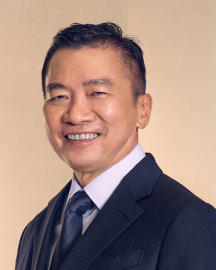
Loh Boon Chye: Asia is now a critical part of global risk transfer because many of the world’s macro drivers – policy cycles, supply-chain adjustments, sector leadership – originate from this region. As one of the most liquid and international marketplaces for trading and clearing multiple asset classes across Asia, investors rely on SGX for early, transparent price discovery as they navigate these shifts. Our role is to provide a resilient, multi-asset platform that connects global participants to Asia’s markets with confidence.
Walt Lukken: Asia is an essential pillar of the global derivatives ecosystem. Over the past decade, the region has seen rapid growth in market participation, product innovation and cross-border activity, with its markets now central to liquidity and price discovery across asset classes. We also see an ongoing regional push to align more closely with US and EU time zones, which helps improve liquidity capture and better support global risk transfer.
More broadly, Singapore sits at the center of that development. It offers a trusted, well-regulated hub for international participation and has consistently focused on building strong market infrastructure, clear rules of the road and an open, outward-looking environment. It also serves as a bridge into some of the region’s most dynamic domestic markets, including India and China. Asia’s influence will continue to grow – and Singapore will remain a key conduit between regional growth and global risk management needs.
MV: Turning to global fragmentation and risk infrastructure – fragmentation in clearing and collateral rules continues to shape market behaviour. How should global venues adapt to ensure the efficient management of risk across time zones?
LBC: Fragmentation in clearing and collateral frameworks creates friction for global investors. What they want is consistency, capital efficiency and robust infrastructure across time zones. Our approach is to keep strengthening the resilience of our clearinghouse, ensure margins remain transparent and work with global intermediaries so that risk can be transferred seamlessly. Reliability and interoperability are becoming as important as innovation itself.
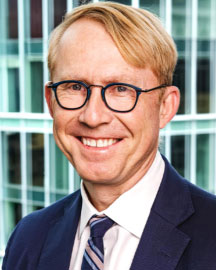
WL: Absolutely agree with Boon Chye – fragmentation in clearing and collateral rules remains one of the most significant friction points in our markets. Different rule sets, margin models and operating hours can create unnecessary complexity for market participants who manage risk that spans multiple geographies and time zones.
To keep markets efficient, global venues should prioritize a few areas. First, greater alignment of standards. We don’t need identical rulebooks, but we do need clearer comparability in margin methodologies, collateral eligibility and default-management practices. Second, we need continued investment in technology that adopts common data standards and greater automation in post-trade processes. This will allow firms to respond to volatility without being slowed by regional constraints.
FIA has engaged deeply in discussions on this. We recently participated in a series of regulator meetings across Singapore, Hong Kong and Japan to discuss our distributed ledger technology paper, with a particular focus on collateral tokenization. In those meetings, we emphasized that strong regulatory involvement is essential for achieving the standardization needed for industry-wide adoption. We also highlighted that common standards and interoperability frameworks will be critical to ensure tokenized collateral can move safely and seamlessly across markets and systems at scale.
MV: Trust and stability in times of stress are what define the cleared derivatives markets. In moments of market volatility, we see a “flight to usage” from investors. What capabilities are exchanges and clearinghouses expected to deliver at those times?
WL: When markets turn volatile, participants look for exchanges and clearinghouses to deliver three core capabilities: uninterrupted market access across time zones; transparent, predictable risk management; and, as the ultimate backstop, strong default management frameworks.
Firms need certainty that they can trade, hedge and adjust exposures around the clock. That’s why the industry is leaning into extended hours, night sessions and other regional initiatives that align Asia’s trading day more closely with US and European time zones. It also means delivering resilient technology, robust capacity to handle sudden volume spikes and seamless connectivity for participants operating globally.
In moments of stress, clearinghouses must apply margin models consistently and communicate clearly. Market participants need to understand why margin is moving, how resources are being deployed and what to expect next. Predictability is a form of stability.
Clearinghouses must also be able to manage a member default efficiently with tested playbooks, well-drilled auction processes and close coordination with supervisors and market participants. That’s the foundation of trust in our system. These capabilities give the cleared derivatives markets their resilience – and why, in times of stress, people turn to our markets.
We’re seeing important market-structure innovations that strengthen this foundation – from moves toward T+1 or even T+0 settlement, to efforts to improve collateral mobility and clearing efficiency.
LBC: Echoing Walt, in volatile periods, participants turn to venues that stay steady. For SGX, that means markets remain open, risk is managed prudently and price formation stays orderly. Resilience is not just about systems – it’s a mindset across the organisation. We take seriously our responsibility as a key price discovery venue in Asia, particularly when global conditions in the Western hemisphere shift overnight. Our overnight T+1 session now contributes roughly 20% of total derivatives volumes – and its growth has outpaced our overall derivatives growth – underscoring the importance of our role as a round-the-clock liquidity hub.
MV: Looking at global policy and market architecture, FIA’s Asia Derivatives Conference brings together policymakers and industry leaders from around the world in Singapore. What does this dialogue enable that cannot be achieved from the US or Europe alone?
LBC: Singapore brings together policymakers, global exchanges, intermediaries and institutional users in a way that reflects how modern markets operate – open, international and risk-focused. FIA Asia enables conversations that cut across borders and asset classes. Being in Singapore matters: it keeps the dialogue grounded in the realities of global participation and the needs of investors who operate across multiple markets.
WL: Asia has its own market structures, regulatory priorities and growth drivers. Hosting this conference on the ground and having face-to-face dialogues gives clearer visibility into those nuances. And Singapore serves as a neutral and well-connected hub. This event enables open and constructive conversations among global and regional stakeholders, which is difficult to replicate from Europe or the US.
MV: Where do you see the most meaningful next wave of demand coming from, in terms of asset classes or market access?
WL: New market participants and technological innovation will continue to shape the next wave of demand in derivatives. Retail investors increasingly engage with futures and options, broadening participation and deepening liquidity. At the same time, the digitization and tokenization of traditional assets are opening new avenues for market access. We also see strong momentum in non-traditional products, such as perpetual futures. In fact, we have a panel on this very topic at the Asia conference. Over the next five years, we expect these trends to accelerate.
LBC: Indeed. We see continued interest in tools that help investors manage Asia’s structural themes: supply-chain reconfiguration, technology leadership, energy transition and the evolution of emerging markets. Demand is broadening across equities, FX and commodities, and there is appetite for products that link these thematic risks together. The next wave of growth will come from solutions that make cross-asset hedging and access more capital-efficient. On perpetual futures, SGX recently launched the first listed institutional-grade crypto perpetuals futures, traded and cleared on a regulated exchange – we think this is a major game changer for crypto markets. Our focus is on ensuring a well-architected risk framework and market structure, rather than the asset itself. If done well, the perpetual futures format can be replicated for other asset classes, depending on what our clients need.
MV: FIA and SGX Group have worked closely with global participants for many years. What must we keep doing – or do differently – to support cross-border market development?
WL: Cross-border market development thrives on collaboration. We must continue to foster close collaboration between regulators, exchanges, clearinghouses and market participants across regions, and work to align standards, harmonize clearing and collateral practices, and make regulatory navigation as straightforward as possible.
LBC: Collaboration across the industry is essential. No single venue or participant can solve the challenges of global market structure on its own. Market participants are increasingly aware of the need for collaboration. A case in point is our recent partnership with B3 to broaden global participation and deepen liquidity of BRL futures during Asian trading hours. If I can paraphrase what Walt had said, it requires an entire ecosystem to come together. For SGX, our focus is to work closely with index partners, intermediaries and clearing members to improve cross-border access, strengthen infrastructure and support investor confidence. Liquidity begets liquidity. Cross- market partnerships create the consistency and trust that global users look for.
MV: If there is one message you would want attendees to take away from FIA Asia this year, what would it be?
LBC: Global markets will always move, but what investors need from us is steady, trusted access to Asia. If there is one message from FIA Asia this year, it is that strong, open and resilient infrastructure – backed by close industry collaboration – will remain the foundation of confidence for global participants.
WL: 2025 tested our markets. The trade challenges, uncertainty, policy pivots and so much more created incredible volatility. And from that, our markets have a good story. They didn’t break. They kept operating and serving participants.
This good news story didn’t happen overnight. It comes from many years of collective focus and determination to build trust and operational capacity. As we see new markets come online in a big way – prediction markets, stablecoins, perpetuals, crypto, etc. – we need to make sure we have planned ahead, that we have anticipated, that we have considered scenarios, and that we have kept our focus on customer protections and the resilience of our markets.
