
Michael Selig is wasting little time putting his stamp on the US Commodity Futures Trading Commission.
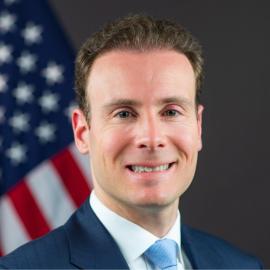
A month after taking office as chair, Selig announced a “Future-Proof” initiative, directing CFTC staff to conduct a comprehensive review of the agency’s rules and regulations and modernise them to ensure a level playing field for new entrants and incumbents alike. The initiative is designed to recalibrate a regulatory framework that Selig argues has not kept pace with innovation in financial markets.
“We are at a pivotal moment in the evolution of American financial markets,” Selig wrote in an opinion piece published on 20 January in The Washington Post. “Advances in technology are enabling the creation of entirely new products, platforms and business models, in turn transforming the financial services landscape as we know it.”
Selig argues that many of the CFTC’s core rules were designed for agricultural futures markets and do not adequately address newer asset classes or trading venues. “The agency’s regulations must adapt to meet our nation’s builders where they are,” he said. “While decades-old rules designed for agricultural futures contracts may still suit those markets today, they do not contemplate nascent products or trading venues.”
At the centre of his agenda is a shift away from what he describes as regulation by enforcement, towards a lighter, more predictable framework built around formal notice-and-comment rulemaking. Selig says that this approach would provide clearer guidance to market participants and reduce policy whiplash across political administrations.
“Arbitrary, cumbersome and opaque rules will not stand the test of time,” Selig said. “The CFTC’s approach should be to deliver the minimum effective dose of regulation – nothing more and nothing less.”
“This means an end to policymaking through enforcement,” he added. “And this means the agency’s policymaking divisions will develop clear rules of the road for market participants that will be codified through notice-and-comment rulemaking to ensure that the regulatory requirements do not change wildly from administration to administration.”
Expanded authority
Appointed by President Donald Trump, Selig took the reins on 22 December as the CFTC stands on the brink of potentially expanded authority. Lawmakers are negotiating digital asset market structure legislation that could hand the agency primary oversight of large parts of the crypto market, while a surge of applications for prediction markets is pulling it further into retail activity.
Prediction markets, largely niche products before the pandemic, have grown into a multibillion-dollar sector, with volumes expected to rise further in 2026.
“Prediction markets have exploded in popularity as broad swaths of market participants seek to hedge portfolio risks and test their abilities to forecast truth,” Selig said. “Similarly, the digital asset economy has grown from a mere experiment in cryptography to a more than $3 trillion market with ever greater types of assets being generated on blockchain networks.”
Selig has positioned the agency as ready to assume a larger crypto mandate if Congress acts. “Should Congress deliver on making America the crypto capital of the world and send digital asset market structure legislation to the president’s desk, the CFTC will have a broad set of new responsibilities,” he said. “Pass us the torch, and we will ensure that these markets flourish at home with tailored regulatory frameworks that keep American markets the best in the world.”
The CFTC has already taken steps in that direction. Over the past year, under the previous leadership of acting chair Caroline Pham, it cleared a path for spot crypto trading on futures exchanges and created a framework allowing some overseas crypto platforms to legally offer derivatives to US customers. Selig brings direct experience in the area, having previously served as chief counsel to the Securities and Exchange Commission's Crypto Task Force, advising SEC chair Paul Atkins. Later this month, Selig and Atkins plan to hold a joint event to discuss harmonisation of crypto supervision between the two agencies.
Selig has also announced plans to replace the agency’s Technology Advisory Committee with an Innovation Advisory Committee. This will advise the CFTC on the “commercial, economic, and practical considerations of emerging products, platforms and business models in the financial markets as the agency develops clear rules of the road for the Golden Age of American financial markets,” Selig said.
Selig plans to nominate the 12 members of his CEO Innovation Council as the committee's initial members. The list includes crypto executives such as Gemini CEO Tyler Winklevoss, Polymarket CEO Shayne Coplan, Kalshi CEO Tarek Mansour, Crypto.com CEO Kris Marszalek and Kraken co-CEO Arjun Sethi, alongside leaders from traditional market infrastructure firms including CME Group chair and CEO Terry Duffy, Intercontinental Exchange CEO Jeff Sprecher, Cboe Global Markets CEO Craig Donohue and Nasdaq CEO Adena Friedman.
Applications for additional members are open until 31 January, with the CFTC considering input from fintech providers, public interest groups, academia and market infrastructure firms.
Beyond innovation policy, Selig has pledged to continue efforts to reduce regulatory friction for CFTC registrants, particularly around the agency’s historically slow approval process. Under Pham, the pace of reviews for designated contract markets, derivatives clearing organizations and futures commission merchants accelerated after years of delays, aided by initiatives such as the “Crypto Sprint.”
In Senate testimony last November, Selig described streamlining the application process as a “key priority,” saying he planned to “remove a lot of these barriers that are really in the way of success.”
Internal dynamics
His push comes amid unusual internal dynamics at the agency. Following a series of staff and commissioner departures in 2025, Selig is currently the only Senate-confirmed commissioner, despite the CFTC being designed as a five-member commission. Industry groups, including FIA, have urged the White House to move quickly to fill the remaining seats.
“The diversity of expertise, the diversity of opinions, the durability of the policy that it will create, is incredibly important for safety and soundness,” said Alicia Crighton, the global head of the cleared swaps and broker-dealer clearing businesses at Goldman Sachs during a recent House testimony on behalf of FIA.
Selig has, however, begun assembling his leadership team, appointing former Division of Market Oversight director Amir Zaidi as chief of staff, along with senior advisers Michael Passalacqua and Cal Mitchell.
As Selig works to fill key vacancies and advance his Future-Proof agenda, market participants will watch closely to see whether the new chair can translate his vision into a regulatory reset – one that reshapes the CFTC’s role as financial markets move further into the digital era.
Who Is Michael Selig, the new chair of the CFTC?
Michael Selig, chair of the US Commodity Futures Trading Commission, brings a mix of regulatory, legal and crypto policy experience to the role at a moment of rapid change for derivatives regulator.
Selig is not new to the CFTC. He began his career at the agency in 2014 as a law clerk to then-Commissioner J. Christopher Giancarlo, who would later serve as chairman. That early exposure placed Selig at the centre of derivatives regulation during a period marked by post-crisis reforms and growing debate over market structure and innovation.
After his initial tenure at the CFTC, Selig moved into private practice, working at several global law firms where he advised financial institutions and market participants on derivatives, regulatory compliance and market infrastructure issues.
He returned to government in 2025, joining the Securities and Exchange Commission as chief counsel to the Crypto Task Force. In that role, Selig served as a senior advisor to SEC Chairman Paul Atkins, helping shape the agency’s approach to digital assets.
Selig was appointed CFTC chair by President Donald Trump and took office on 22 December.
