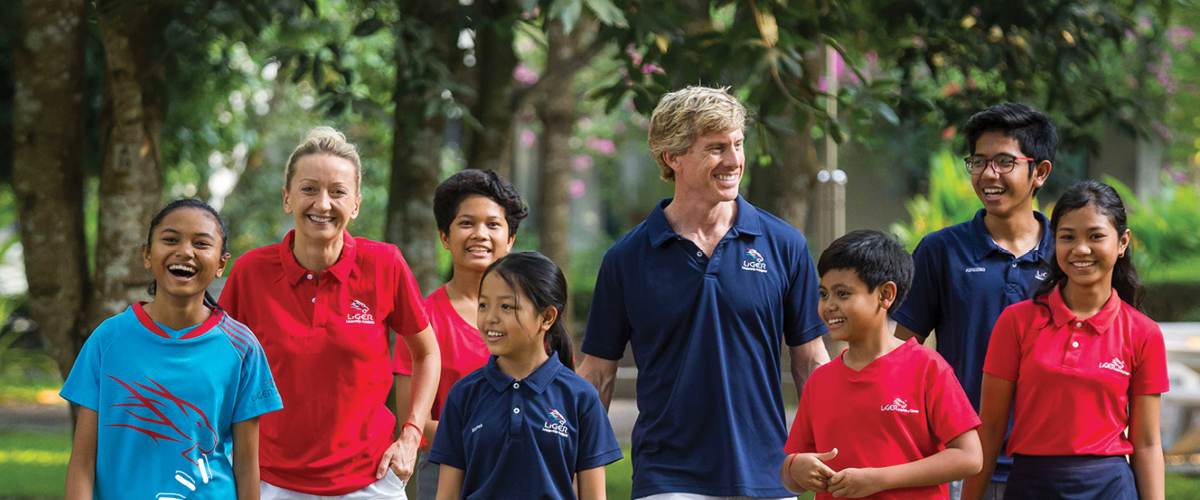
Can one school change a country? Trevor Gile thinks so. He is one of the co-founders of the Liger Leadership Academy, a secondary school in Cambodia with an innovative and ambitious approach to education.
Gile, a lifelong futures trader who now runs a proprietary trading firm based in Poland, first visited Cambodia in 2002, when he and his wife were traveling around the world. They came away determined to do something to help its people climb out of poverty.
After years of research and planning, they decided that the best solution for long-term change was to focus on education. Rather than trying to impact the educational system as a whole, they decided to start a single school with the goal of helping a small number of exceptional students become the leaders of tomorrow. In the words of the school’s mission statement, “Liger believes a meaningful investment in the right few will change the lives of many.”
The school opened its doors to the first cohort of students in 2012, and today it has 110 students between the ages of 12 and 17, split evenly between boys and girls. The school sets high standards for academics and teaches science, technology, engineering and mathematics at an international level. In fact, 12 of its students recently scored four or five on the Advanced Placement tests in statistics and computer science. Those tests are used by U.S. universities to measure academic achievement. A score above three effectively means that the students have college-level mastery of the subject.
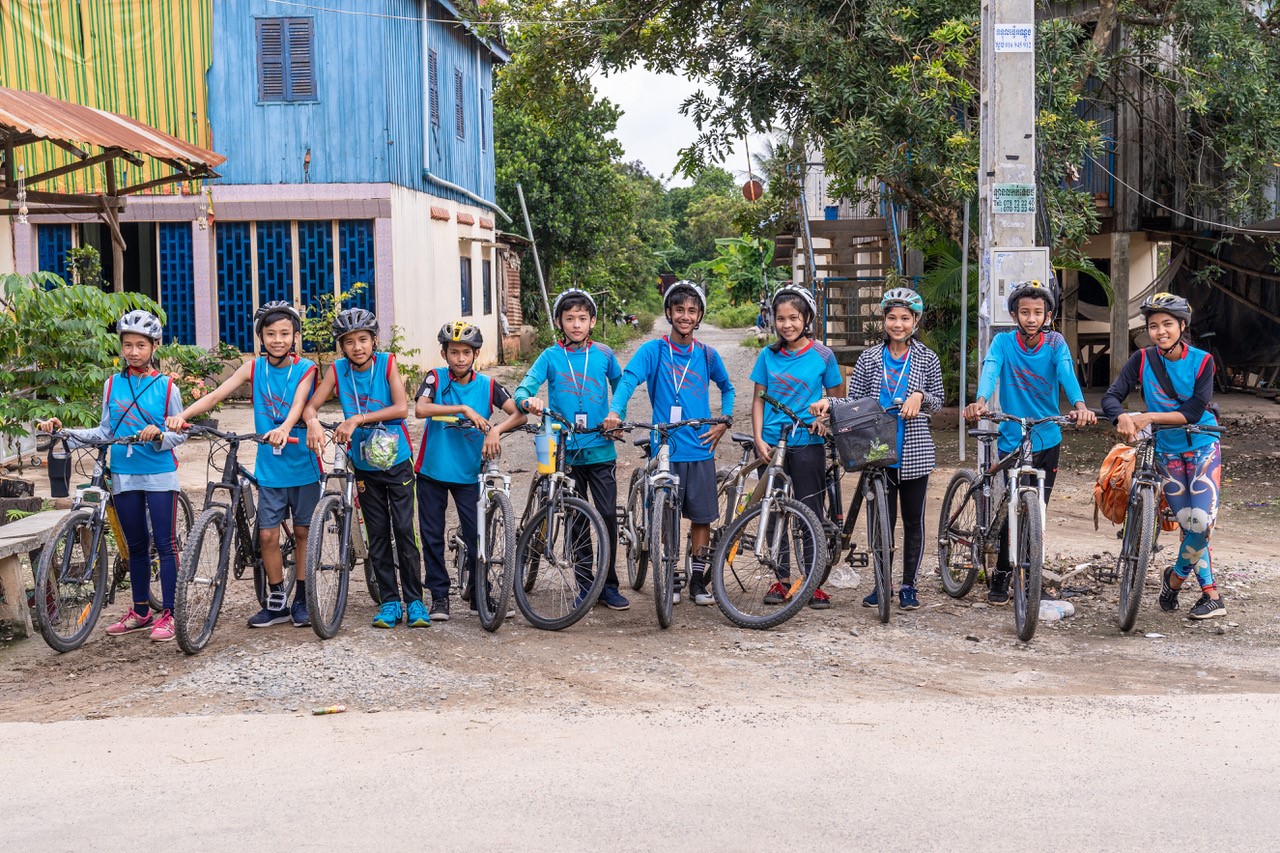
As part of their studies in entrepreneurship, Liger Academy students created a Phnom Penh-based bike tour business called Journeys of Change. This business is operated by students (with guidance from staff) on the weekends and creates job opportunities for students to help further and fund their education after Liger Academy.
The real innovation of Liger Leadership Academy, however, is in its project-based learning. The school’s philosophy is that students will learn more by teaching themselves and it encourages all students to spend part of their days working on projects that they choose for themselves. For example, one group of students wrote a textbook on economics in both English and Khmer. Another group of students has been studying paleontology because they want to hunt for dinosaur bones in Cambodia. Still another group is working on a project to launch low-cost micro-satellites into orbit over Cambodia, using the Cubesat model used by engineering programs at U.S. universities to conduct scientific experiments in space.
The project-based philosophy carries over to the school’s environment, which is designed to encourage self-reliance and practical skills. Students under the age of 15 live in a dormitory, but the older students move to apartments where they live in groups of six and take responsibility for household chores, including cooking dinner. The school has also created its own money, a digital currency called the “pedro,” that the students can earn and spend on campus.
The educational achievements at Liger Academy would be remarkable in any country, but they are particularly significant for Cambodia. In the late 1970s, when the Khmer Rouge were in power, roughly one fifth of the country’s population died from disease, malnutrition or execution. That left a lasting legacy on the country’s demographics; 40% of the population today is under the age of 24. The Khmer Rouge also decimated the country’s educational system: teachers, lawyers, doctors, civil servants—anyone with an education, or even wearing glasses, was targeted for execution.
So how did a futures trader born and raised in the U.S. develop such a strong interest in Cambodia? Gile explained that his desire to help the nation dates back to 2002, when he and his wife were traveling through developing countries in Africa and Asia. Along the way they saw many non-governmental organizations in action, but felt that the solutions all too often were aimed at filling an immediate need rather than ending the cycle of poverty and dependency.
At the end of their trip they moved to Poland, his wife’s homeland, and he launched Liger Investments, a proprietary trading firm focused on futures markets. His success in that business paved the way for the school in Cambodia by providing not only the funding but also the impetus for innovation. As an entrepreneur himself, he wanted the school to encourage the students to become “resourceful problem solvers” with the skills and determination to become change agents for Cambodia.
So far the school has been funded entirely by Gile and his wife. But the two founders envision a day not far in the future when the school will shift to external funding. In fact, they view the Liger Leadership Academy as a prototype that can be replicated in other countries, either directly by the school’s management or indirectly by sharing its curriculum and educational philosophy.
“We always viewed this as a pilot” for similar schools in both the developing and developed world, Gile said. For the first few years they concentrated on making sure that the model worked, but now that the school is set to graduate its first students in June 2020, “we’re finally ready to come above the radar.”
For more information visit www.ligeracademy.org.
Below: Agnieszka Tynkiewicz-Gile and Trevor Gile, the founders of the Liger Leadership Academy, with some of the school’s students