
Last week, FIA's Board of Directors met with US policymakers in Washington, DC to discuss the issues shaping the future of our markets. These annual meetings have become an important tradition, and they serve to strengthen the relationships that underpin effective policymaking.
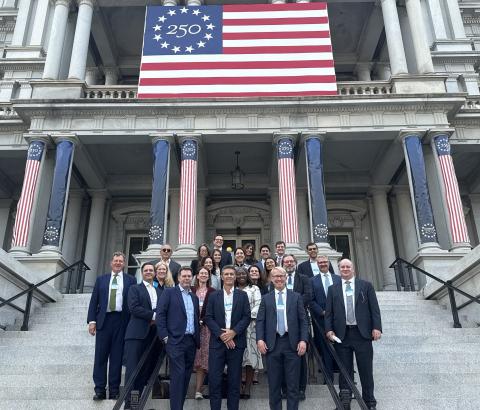
During my 30 years in this industry, there are more issues of first impression being debated in Washington than ever before – from crypto regulation to perpetuals and 24/7 markets to prediction markets. It’s breathtaking, and it makes for lively discussions with Beltway policymakers.
I have always said that when we are uncertain on the path forward, we should rely on first principles of sound markets. That involves promoting policies of trust, fairness and integrity. Markets work best when trust exists. The same holds true for the relationship between the public and private sectors.
Policymakers face an increasingly complex agenda. They must navigate issues ranging from market structure and digital assets to US Treasury market resilience, cybersecurity and the future of clearing.
That is why showing up matters.
Nothing replaces the value of sitting across the table from regulators, legislators and their staff to discuss how markets function in practice. Those conversations provide us the opportunity to explain both what we believe and why we believe it. These visits also provide us the opportunity to hear directly from policymakers, better understand their priorities and exchange ideas on the challenges ahead.
Advocacy has always worked best as a dialogue. Listening matters just as much as speaking.
During our fly-in, we met with leaders from the US Treasury Department, the Commodity Futures Trading Commission, the Securities and Exchange Commission and the White House National Economic Council. We also sat down with Congressman Frank Lucas and Congressman Austin Scott from the House Agriculture Committee and staff of the Senate Agriculture and Banking Committees.
We encouraged policymakers to take a measured and principles-based approach to proposals for 24/7 trading and clearing, recognizing both the opportunities that continuous markets could create and the operational, risk management and governance challenges that still require careful consideration.
We discussed the intersection of the upcoming US Treasury and repo clearing mandate with existing capital requirements – and the importance of ensuring these policies work together to promote both resilience and market liquidity.
We exchanged views on the continued growth of prediction markets and the importance of harmonizing the intersecting rules of the SEC and CFTC.
Of course, digital asset market structure legislation also received significant attention.
FIA supports the eventual passage of this legislation to provide the regulatory clarity that digital asset markets have long needed. At the same time, we encouraged lawmakers to uphold the Commodity Exchange Act’s core principles that allow for responsible innovation in market structure while preserving the highest levels of sound regulation.
These conversations reminded us of the power of FIA's voice. Our association can convene meetings and advocate on behalf of the industry, but our members remain our most credible ambassadors. Every board member brought practical experience that no white paper or comment letter could fully capture.
That is why member engagement continues to be one of FIA's greatest strengths.
The issues before us will continue to evolve. Technology will continue to transform financial markets. Global competition will continue to intensify. New products and new risks will continue to demand thoughtful policymaking. These realities make sustained engagement even more important.
Good policy does not emerge in isolation. It develops through dialogue, informed by expertise and strengthened by relationships built over time.
That is why FIA continues to show up. Those relationships remain among FIA's most valuable assets, and they deserve our continued investment.
Personally participating in the process mattered this week, and it will continue to matter in the years ahead.
